

The federal battery rebate, officially called the Cheaper Home Batteries Program, is about to get smaller. On 1 January 2027 the support for each kilowatt-hour of battery storage drops by about 16 per cent. If you have been thinking about a home battery, here is what is changing and what it means for you.
How the battery rebate works
The rebate is not a cash payment. When an eligible battery is installed, it creates small-scale technology certificates, known as STCs. Your installer takes these certificates and gives you a discount on the price in return.
The number of certificates depends on two things: the battery’s usable capacity in kilowatt-hours (kWh), and a figure called the STC factor.
What changes on 1 January 2027
The STC factor is set by the government and steps down over time until the program ends in 2030. Since 1 May 2026 it has been 6.8 certificates for each kWh. From 1 January 2027 it drops to 5.7, and it will keep falling every six months after that, starting with 5.2 from 1 July 2027.
The rebate also uses tiers based on battery size:
- The first 14 kWh of usable capacity gets the full STC factor
- Capacity from 14 to 28 kWh gets 60 per cent of it
- Capacity from 28 to 50 kWh gets 15 per cent of it
- Capacity above 50 kWh gets nothing
These tiers are not changing in January. Only the STC factor is.
What it means in dollars
The dollar value depends on the market price of STCs, which moves up and down. As an example, at $37 per certificate:
- A 10 kWh battery installed in 2026 creates 68 certificates, worth about $2,500. Installed in January 2027, it creates 57, worth about $2,100.
- A 20 kWh battery installed in 2026 is worth about $4,400 in certificates. Installed in January 2027, it is worth about $3,700.
That is roughly $400 to $700 less on a typical home battery, simply because of the install date.
The date that counts is the installation date
The STC factor that applies is based on when your battery is installed and commissioned, not when you sign the quote or pay a deposit. A quote signed in December but installed in January gets the lower 2027 rate.
Installers get busy in the lead-up to each step-down, so if you want your battery in before the change, get your quote and booking sorted early.
Can you combine it with NSW support?
In NSW you may also be able to use the Home Energy Saver program, which offers interest-free loans for eligible upgrades including batteries, and there are incentives for connecting a battery to a virtual power plant. Eligibility rules apply, so check our battery rebate page for the details and links to the official program pages.
Is a battery still worth it after January?
For many households, yes. The rebate is only one part of the picture. Most of a battery’s value comes from using your own solar power in the evening instead of buying it from the grid at peak rates. Homes that export a lot of solar during the day and use a lot of power at night tend to benefit most.
Because of the tiers, bigger is not always better. Size the battery to your evening usage, not to the rebate.
Get a quote before the change
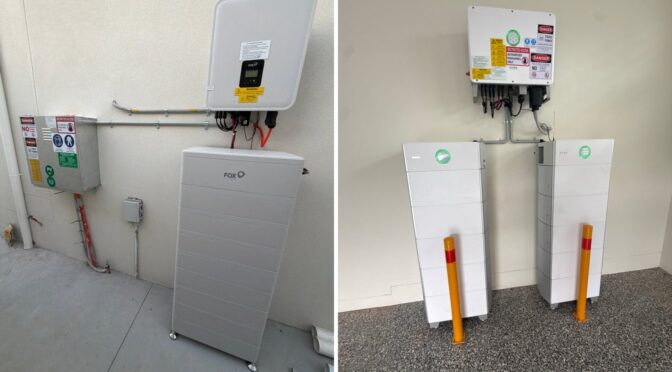
We install Sungrow, Fox ESS and SolaX batteries across Sydney, including Parramatta, Blacktown, Castle Hill, Penrith and Chatswood. Contact us or call (02) 7209 7404 for a free, itemised quote that shows your rebate clearly.
Figures are based on the Clean Energy Regulator’s published STC factor schedule as at November 2026. Certificate prices change, so your quote will show the exact discount. Source: Clean Energy Regulator.

